
Now Reading: ✊🏾🇭🇳Afro-Honduran Garífuna History Lesson 📖
-
01
✊🏾🇭🇳Afro-Honduran Garífuna History Lesson 📖
✊🏾🇭🇳Afro-Honduran Garífuna History Lesson 📖


✊🏾🇭🇳Afro-Honduran Garífuna History Lesson 📖 ⠀ ⠀

Si lo que quieres es gozar⠀
Si tu quieres bailar⠀
Sopa de caracol ⠀
Eh!⠀
Watanegui consup⠀
Wuli Wani Wanaga🎶⠀ ⠀
The song “Sopa de Caracol” became an instant hit across Latin America in 1991. Originally written by Belizean singer Hernan “Chico” Ramos, and translated into Spanish and Garinagu by 🇭🇳 Banda Blanca. ⠀ ⠀
But what does it mean? ’Watanegui consup’ 👉🏽 ‘Quiero tomar sopa’ Swipe 👈🏽 to see more.⠀ ⠀
The 🎶 highlights elements of 🇭🇳 Garífuna culture like:⠀ ⠀
The language known as Garinagu 👉🏽 Traditional dance, Punta 👉🏽 Local Cuisine, Sopa de Caracol made of conch meat and coconut milk 👉🏽 Cultural Instruments like the 🐚 conch shell.⠀ ⠀
As mentioned in our previous post on Guatemala, Garífuna communities are found across 🇭🇳, Belize, and Nicaragua. For a full history of the Garífuna see our last post.⠀ ⠀
In 🇭🇳 the Garífuna people live along the coast from Masca, Cortés to Plaplaya, and Gracias a Dios. The oldest settlement is in Roatan at Punta Gorda founded in 1797. After settling many Garífuna continued migrating to Trujillo and across the Caribbean coasts.⠀ ⠀
Garífuna cuisine in 🇭🇳 is rich with coconut milk, seafood, plantains and yuca. Traditional dishes include; Hudutu, Tatau, Pan de Yuca, and Darasa (a type of tamales cooked in banana leaves) and have their own alcoholic beverage known as Gifiti.⠀ ⠀
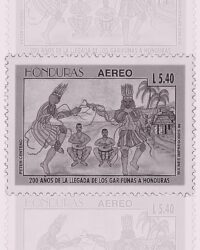
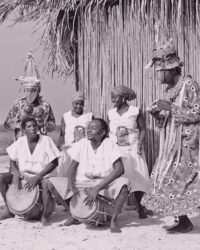
Dance is also a big part of the culture like Punta, Fedu, and Mascaro have history dating back hundreds of years. One of the most important rituals is the Denominated Daga, a tradition dedicated to the dead.⠀ ⠀
Trajes tipicos often include the colors red, green, black and gold. 🔴 symbolizes Garífuna blood, 🟢 color of land that provides vegetation, ⚫ the color of their skin, 🟡 the sun or fountain of life.⠀ ⠀
Notable Figure:⠀
🇭🇳 Thomas Vincent Ramos, a civil activist, conservationist of Garífuna culture and national hero. He is also the founder of Garífuna Settlement Day in Belize.⠀ ⠀
Today Garífuna Settlement day is celebrated annually on April 12th in Roatan 🇭🇳, recognizing the day they arrived.